Planaria, Hydra and Vorticella in a Shrimp Tank
Seeing planaria, hydra or vorticella in a shrimp tank is very common and usually not a reason to panic. What matters is identifying which one you have and dealing with it calmly, using a method that does not harm your shrimp.
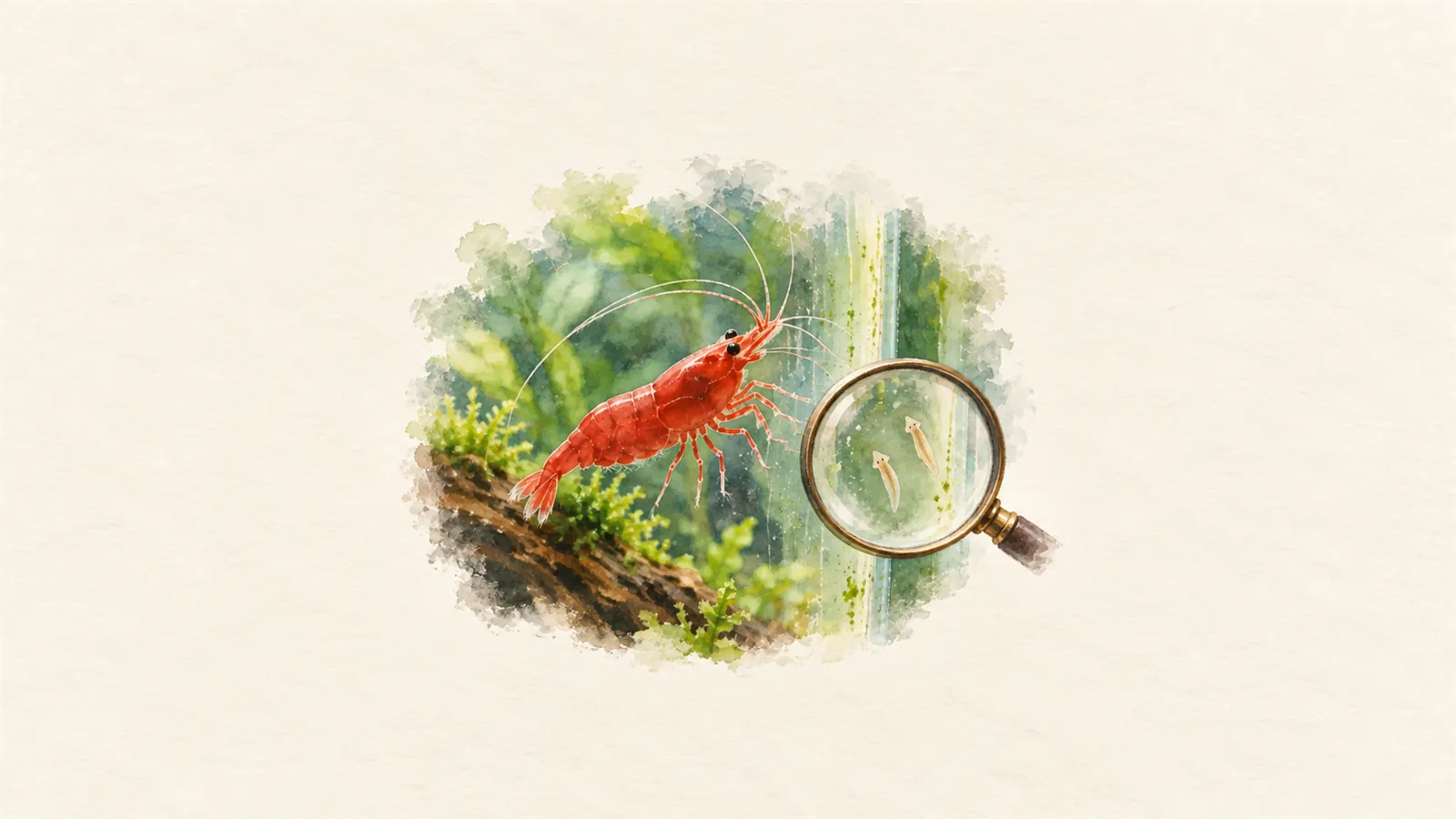
What are planaria, hydra and vorticella?
All three usually enter a shrimp tank with new plants, moss or water from another tank, and they multiply quickly when there is too much food.
- Planaria: a white, cream or brown flatworm 5–15 mm long, with a triangular head and two eye spots. It glides along the glass and is seen most at night and after feeding.
- Hydra: a distant relative of jellyfish, a polyp a few millimeters long. It attaches to the glass, a leaf or decor at one point and stretches thin tentacles into the water. It can be white, brown or green.
- Vorticella: a bell-shaped single-celled organism, hard to see with the naked eye, that attaches to the shrimp's shell and legs. It looks like a whitish, fuzzy coating on the shrimp.
Planaria or a harmless white worm?
Not every white worm in a shrimp tank is planaria. The most common mix-up is with thin, thread-like nematodes (detritus worms) and small worms living in the substrate. These are usually harmless and feed on leftover food.
- Planaria: flat, glides smoothly on the glass, triangular head and eye spots are visible.
- Nematode: thin as a thread, wriggles through the water in an "S" motion, no distinct head.
If you see lots of nematodes, that is not a reason to treat; it is a sign you are feeding too much.
Which ones are actually harmful?
Planaria can prey on baby shrimp and on small shrimp left vulnerable by molting. A large planaria population noticeably slows colony growth. Hydra catch newborn shrimplets with the stinging cells on their tentacles; they usually cannot harm adults, but they suppress breeding. Vorticella on its own is usually not deadly. However, a thick coating makes it harder for the shrimp to move and shows that water quality or flow in the tank is poor.
Why do planaria or hydra appear in my shrimp tank?
There are almost always two reasons: overfeeding and adding things without quarantine. Leftover food and decaying plant matter are their food supply. A few individuals arriving with a new piece of moss can multiply within weeks in a tank with plenty of food. We explain the right amount of food in what do aquarium shrimp eat.
Medication-free cleanup: first steps
- Feed less. Stop or greatly reduce feeding for a few days; shrimp can live on the biofilm in the tank. On its own this is the most effective method against hydra: without food, hydra shrink and decline.
- Remove leftovers. Use a feeding dish, remove uneaten food within 2–3 hours and siphon debris from the bottom.
- Set a planaria trap. Put a small piece of meat or fish in a small trap with a narrow entrance, place it in the tank in the evening and take it out in the morning with the planaria inside. A trap reduces the population but usually does not eliminate it alone; repeat for several nights.
- Remove visible ones by hand. Suck planaria and hydra off the glass with a pipette or tubing during a water change.
Should I use a chemical treatment?
If medication-free methods are not enough, there are products used against planaria and hydra in the hobby. The best known contain fenbendazole or betel nut extract. They are widely used in shrimp tanks and are reported to be generally safe for shrimp when used correctly, but there are two important warnings:
- Most of these products kill snails. If you have valuable snails, move them to another container before treatment.
- Large numbers of dead planaria can foul the water. Watch your water values during and after treatment and do extra water changes if needed.
Never guess the dose; follow the product's own instructions. If possible, test it first on a few shrimp in a small container. Never use any product that contains copper; copper is toxic to shrimp.
What about vorticella?
Vorticella usually reflects the overall condition of the tank: too much organic load, stagnant water and infrequent water changes. Feed less, make small regular water changes and make sure the water moves gently in every corner of the tank. A shrimp leaves vorticella behind with its old shell when it molts; once conditions improve the problem often goes away on its own. Some experienced keepers give a short salt bath for heavy vorticella, but it is a risky procedure for shrimp; try fixing the tank conditions first. If you are losing shrimp, also see why shrimp die.
Preventing it from coming back
- Keep new plants and moss in a separate container for a few days and inspect them before adding them to the tank.
- Feed lightly; remove food that is not eaten within 2–3 hours.
- Keep up your weekly 10–20% water changes.
- When setting up a tank, wait for the cycle to finish; a mature, balanced tank resists these problems better. Details in the shrimp tank setup guide.
The values and advice in this guide reflect what is widely accepted in the shrimp hobby. They can vary with the line, your water and the breeder your shrimp came from. Make changes to your tank in small steps.