What Do Aquarium Shrimp Eat? A Cherry Shrimp Feeding Guide
Aquarium shrimp will eat almost anything: algae, biofilm, fallen leaves, leftover food. The real question is not what they eat but how much. Most problems in shrimp tanks come from overfeeding, not hunger.
| Main food | Biofilm and algae |
|---|---|
| Extra food | Once a day or every other day |
| Amount | What is eaten within 2–3 hours |
| Going without | Adults are fine for a week |
Rule of thumb: if food is still in the tank after 2–3 hours, you are overfeeding.
What do shrimp eat in the wild?
Cherry shrimp and other Neocaridina, as well as Caridina and Amano shrimp, are grazers and detritivores. They scrape the thin living layer off rocks, leaves and plants: the biofilm, made of bacteria, microscopic algae, fungi and decaying organic matter. Watch a shrimp and you will see the tiny claws on its front legs constantly carrying something to its mouth; that is grazing.
That is why a well-established, planted, mossy tank can feed shrimp for days without any extra food, while a freshly set-up, spotless tank is basically an empty plate.
What to feed in the aquarium
1. Prepared shrimp food
Granules, tablets or sticks made for shrimp are the most practical supplement. Foods with plant ingredients plus calcium and minerals help with molting. Shrimp will eat fish food too, but shrimp foods are made to sink and to foul the water less.
2. Blanched vegetables
Zucchini, cucumber, spinach, carrot and peas are the most common. Wash the vegetable well, blanch it for a few minutes or dip it in boiling water so it softens and sinks, and give a small piece. Choose organic or at least well-washed produce; pesticide residue is risky for shrimp.
3. Dried leaves
Indian almond (catappa), mulberry and oak leaves are classics. As they slowly break down, biofilm grows on them, and shrimp eat both the leaf and that layer. Leaves also give shrimp places to hide. Dip a leaf in boiling water and let it sink before adding it. If you collect your own, stay away from roadsides and sprayed gardens.
4. Protein (occasionally)
Shrimp also like animal protein: dried tubifex, artemia, spirulina and protein foods made for shrimp. Very small amounts once or twice a week are enough. Protein fouls the water faster than plant foods.
How often and how much?
The safest starting point is once a day or every other day, a very small amount for the number of shrimp you have. Then watch:
- If shrimp gather on the food within minutes and finish it in 1–2 hours, the amount is right.
- If food is still there after 3 hours, you are overfeeding. Remove what is left and give less next time.
- If the shrimp show no interest at all, the tank already has enough natural food. That is not a bad thing.
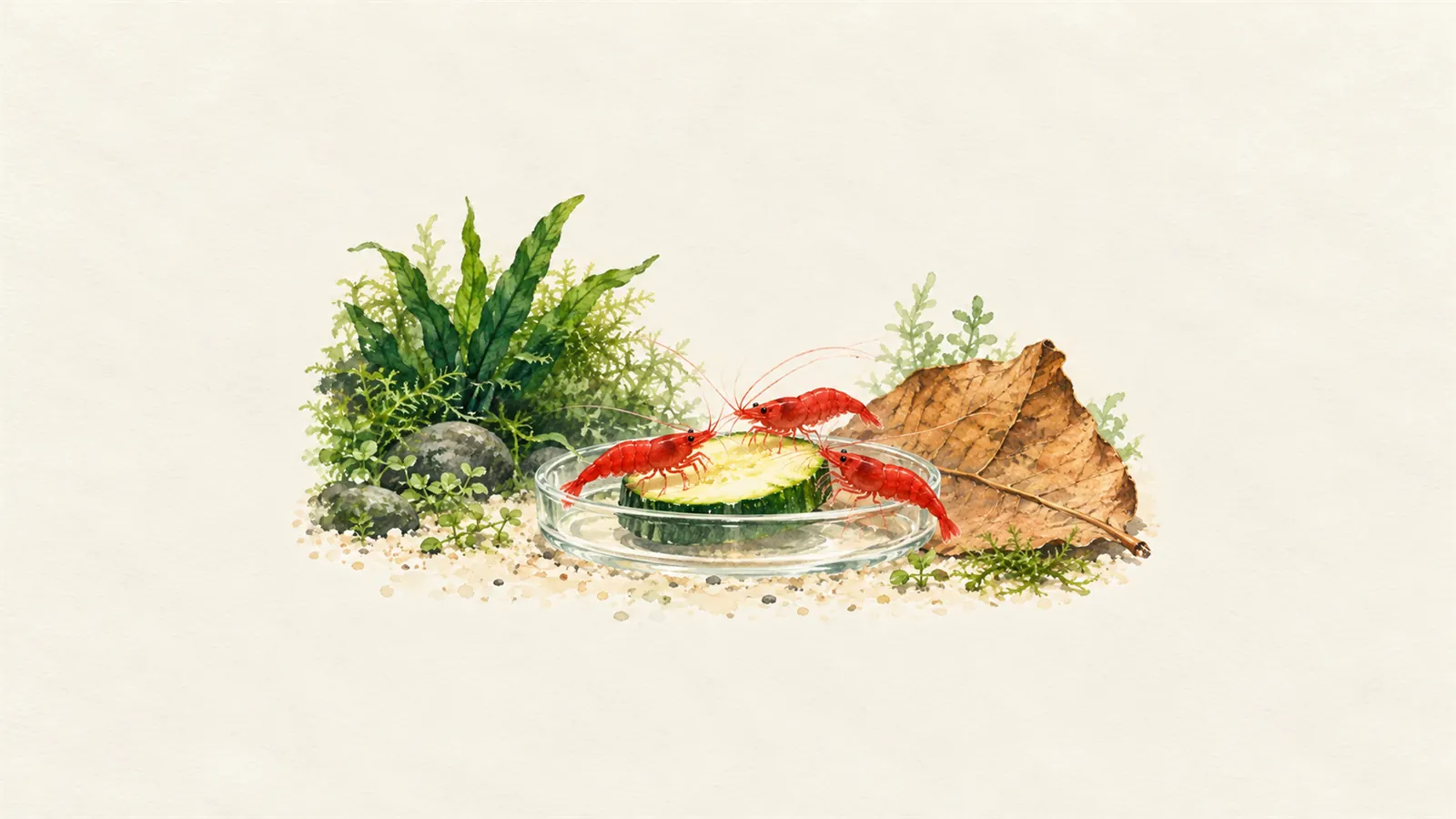
A feeding dish (a small glass or ceramic bowl) makes leftovers easy to see and remove and stops food from sinking into the substrate and rotting.
Why is overfeeding dangerous?
Uneaten food rots and releases ammonia, and in small shrimp tanks this happens very fast. Overfeeding also fuels blooms of pests such as planaria (flatworms) and hydra, which are especially dangerous to shrimplets. It is one of the most common causes of shrimp losses; see why shrimp die for more.
What do shrimplets eat?
Newborn Neocaridina are miniature copies of their parents and eat the same things, just with smaller mouths. Their best food is still biofilm and algae, which is why a mossy tank is their biggest advantage. You can also use powdered foods sold for baby shrimp; sprinkle a very small amount in several spots around the tank.
Going on vacation: will my shrimp starve?
In an established tank, adult shrimp easily manage a week without extra food. Overfeeding before a trip is the biggest mistake: you come back to fouled water. For a longer trip, leave one or two dried leaves in the tank or ask someone to feed a very small amount every three days. If you use an automatic feeder, test the dose for a few days before you leave.
What not to feed
- Anything containing copper, such as some fish medications and plant fertilizers. Copper is toxic to shrimp.
- Fatty, salty or spicy human food.
- Poorly washed vegetables and fruit.
- Bread and baked goods: they cloud and foul the water quickly.
Tip: when you switch food brands or try a new vegetable, give a very small piece first and check after 2–3 hours. A few tries will tell you what your shrimp like.
The values and advice in this guide reflect what is widely accepted in the shrimp hobby. They can vary with the line, your water and the breeder your shrimp came from. Make changes to your tank in small steps.