Cherry Shrimp and Neocaridina Care: Beginner's Guide
Neocaridina shrimp, known for color forms such as Red Cherry, Blue Dream and Yellow, are among the best shrimp for anyone starting in the hobby. They are hardy, breed readily and do well in most tap water. Here is what you need to know for a good start.
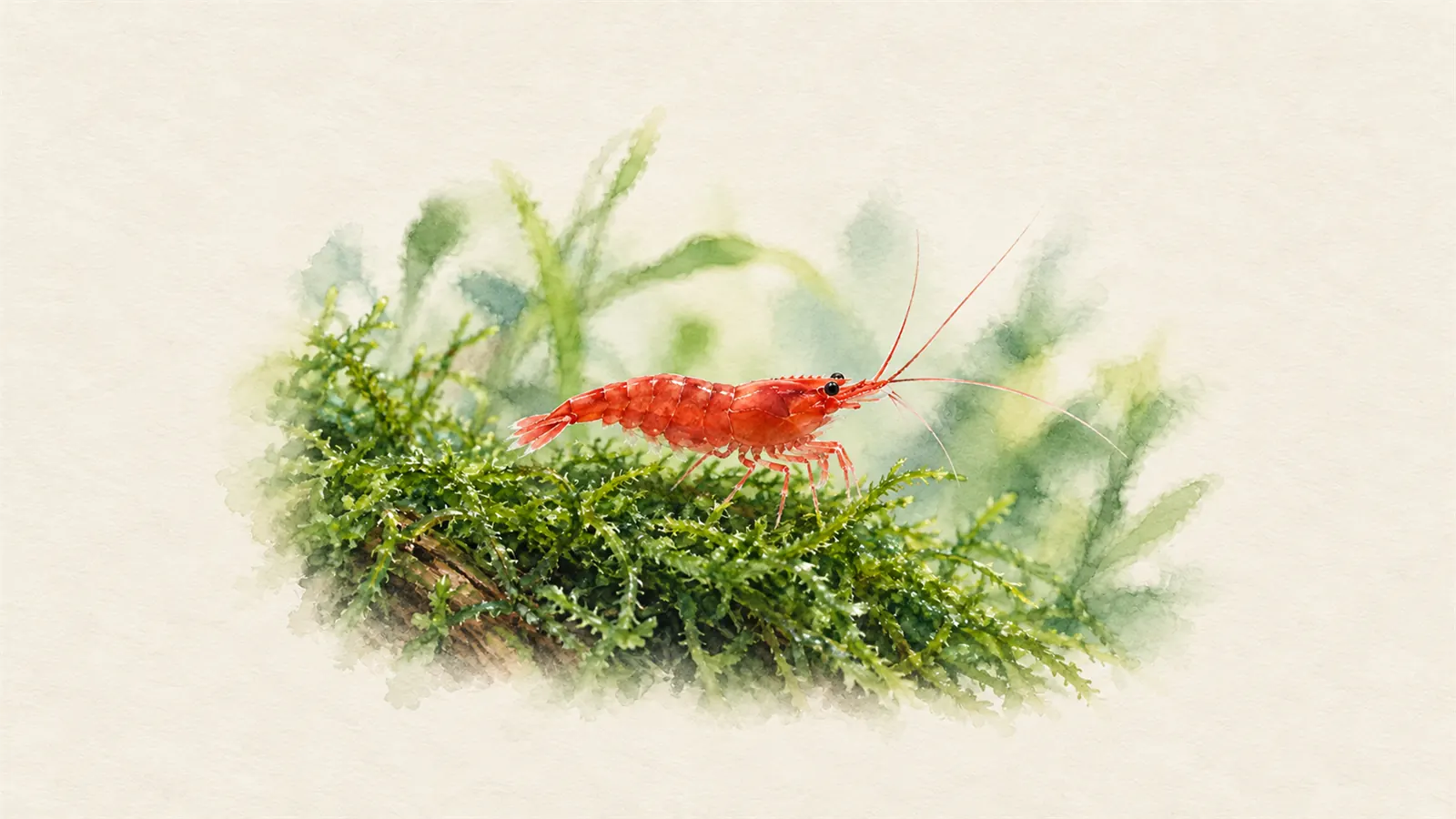
Water parameters at a glance: Neocaridina davidi
| Parameter | Value |
|---|---|
| Temperature | 20–25 °C (68–77 °F) |
| pH | 6.5–8.0 |
| GH | 6–10 °dH |
| KH | 2–6 °dH |
| TDS | 150–250 ppm |
| Size | 2–3 cm (0.8–1.2 in) |
| Lifespan | 1–2 years |
These ranges are general guidance. Stable values matter more than hitting one exact number.
What is a Neocaridina?
Most of the shrimp you see in the hobby, such as Red Cherry, Sakura, Fire Red, Blue Dream, Yellow, Orange, Green Jade, Black Rose and Chocolate, are color forms of a single species: Neocaridina davidi. In the wild they are brown and transparent; today's bright colors are the result of many years of selective breeding.
This has an important consequence: different Neocaridina colors interbreed. If you keep red, blue and yellow together, within a few generations the offspring fade and drift back toward the wild brown form. Use a separate tank for each line whose color you want to keep.
Tank setup
Tank size
Shrimp are small, but water values change very quickly in very small tanks. We recommend at least 20 liters (5 US gallons) to start. The more water you have, the more slowly temperature, pH and waste build-up change, so you have more room for error.
Filter
The most common and safest choice for a shrimp tank is a sponge filter. It does not suck up baby shrimp, and the biofilm that grows on it becomes food the shrimp graze on constantly. If you use a hang-on-back or canister filter, always put a sponge over the intake, or babies will end up inside the filter.
Plants and hiding places
Shrimp look for cover, especially in the vulnerable hours after molting. Java moss, Christmas moss, Java fern and Anubias are easy plants that work well with shrimp. Mosses also give babies both hiding places and grazing areas.
Cycling the tank
Do not add shrimp to a newly set-up tank. First the tank has to complete the nitrogen cycle: the bacteria that make ammonia harmless need to establish. This usually takes a few weeks. See our tank cycling guide for details.
Water
Neocaridina adapt to a wide range of water. In many areas, tap water treated with a dechlorinator is enough. Even so, measure your water at least once; if your tap water is very soft or very hard, you want to know before you buy shrimp. We explain what the values mean in our water parameters guide.
Use dechlorinated water at the same temperature for water changes. About 10–20% a week is enough for most tanks. Avoid very large changes at once; shrimp are more sensitive to sudden changes than fish.
Acclimation: adding new shrimp
Shrimp should be moved slowly from the water they arrive in to your tank's values. The most common method is drip acclimation:
- Put the shrimp and their bag water in a clean container.
- Using thin airline tubing, drip tank water into the container at one or two drops per second.
- Continue until the water volume has doubled or tripled. This usually takes 1–2 hours.
- Move the shrimp to the tank with a net. Do not pour the bag water into the tank.
Feeding
Biofilm and algae in the tank make up a large part of a shrimp's daily diet. When you add food, the most common mistake is overfeeding. A small amount once a day or every other day is enough for most tanks. Remove food that has not been eaten within 2–3 hours; rotting food fouls the water quickly.
Alongside shrimp foods you can offer small pieces of blanched zucchini or spinach. Wash vegetables thoroughly before adding them.
Tank mates
Shrimp are peaceful, but many fish see them, and especially their babies, as food. Even small, calm fish will hunt shrimplets. If your goal is breeding, you will get the best results in a shrimp-only tank (snails are fine).
Breeding
Neocaridina breed on their own in suitable conditions. Females are larger and more colorful than males and have a rounder underside. A female ready to breed shows a yellowish or greenish patch on her back, just behind the head; this is called a saddle, and it is made of developing eggs.
After mating, the female carries the eggs under her tail and fans them constantly to keep them clean. After about 3–4 weeks tiny shrimp hatch. Neocaridina have no larval stage; the babies are miniature copies of their parents.
To start a colony, begin with at least 10 shrimp. This makes it likely you have both males and females and helps the colony establish faster.
Warning: copper
Copper is toxic to shrimp. Some fish medications, fertilizers and water conditioners contain copper. Check the label of every product you add to a shrimp tank, and avoid using insecticides or room sprays near the tank.
The values and advice in this guide reflect what is widely accepted in the shrimp hobby. They can vary with the line, your water and the breeder your shrimp came from. Make changes to your tank in small steps.