Caridina vs Neocaridina: The Differences Explained
Two names everyone meets when starting the shrimp hobby: Caridina and Neocaridina. Both are small freshwater shrimp, but their care is quite different. Knowing the differences is the first step to starting with the right shrimp. In this guide we put the two groups side by side, from water values and crossbreeding to grading and common mistakes, so you can clearly see which one suits your tank.
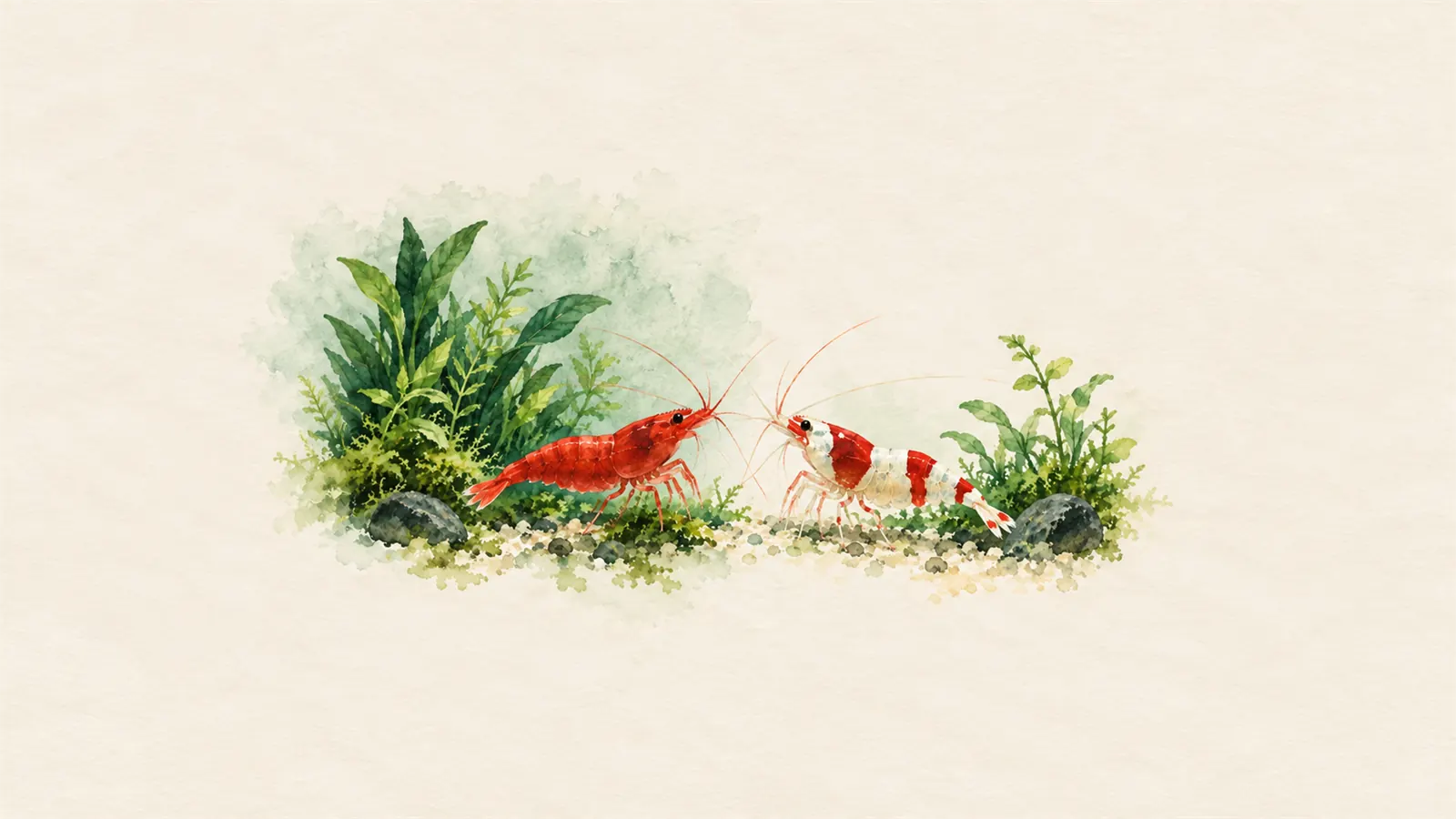
Quick summary: the key differences
The table below shows the most important differences at a glance. These are commonly accepted ranges; sources differ slightly, so focus on the ranges rather than exact numbers.
| Neocaridina | Caridina (Crystal / Bee) | |
|---|---|---|
| Examples | Red Cherry, Blue Dream, Yellow, Green Jade | Crystal Red, Crystal Black, Blue Bolt, King Kong |
| Water | Moderately hard, neutral or slightly alkaline | Soft, slightly acidic |
| pH | 6.5–8.0 | 5.8–6.8 |
| GH / KH | 6–10 / 2–6 | 4–6 / 0–1 |
| Water source | Often treated tap water | Usually RO water plus minerals |
| Substrate | Standard substrate is fine | Usually active substrate |
| Difficulty | Suitable for beginners | Needs experience |
| Tolerance to change | More forgiving | More sensitive |
| Breeding | Fast and steady | Slower, more sensitive to water |
Water needs: the heart of the matter
The most basic difference is water. Neocaridina live comfortably across a wide range and adapt to dechlorinated tap water in many areas. At pH 6.5–8.0, GH 6–10 and KH 2–6, in a tank with stable values, they build healthy colonies. Caridina want soft, slightly acidic water, which usually means RO water, special minerals and an active substrate that buffers pH. For the Crystal and Bee group the target is around pH 5.8–6.8, GH 4–6 and KH 0–1. See the water parameters guide for details.
One important point: "Caridina" is not a single care profile. The Crystal and Bee group wants soft, acidic water, while some Caridina species such as Sulawesi shrimp need warmer, alkaline water. So when you talk about "Caridina care", you need to know which species you mean. On the Neocaridina side, all the color variants (Cherry, Blue Dream, Yellow, Green Jade) largely share the same water profile.
Tolerance to change and stability
Neocaridina are more forgiving of small mistakes. Short pH or temperature swings do not crash the colony right away, which is why beginners learn more easily with them. Caridina are much more sensitive to sudden changes; water changes, temperature swings and acclimation need more care. For example, a rise in KH also pushes pH up; in Caridina this can lead to molting problems and losses. That is why changing water slowly with pre-prepared water should be a standard habit in Caridina tanks.
Do they interbreed?
No. Caridina and Neocaridina are different genera and do not interbreed. Within each group, though, it is different: Neocaridina of different colors interbreed, and after a few generations the babies can revert to the natural brownish color. On the Caridina side, Bee and Tiger lines can interbreed too; hybrid lines (such as Tibee) came about this way. So there is no risk of genetic mixing between the two groups; what you really need to watch is keeping different color lines of the same group in separate tanks.
Can they be kept in the same tank?
Even without the interbreeding issue, we do not recommend it. The ideal water values of the two groups are far apart. Water that meets in the middle is usually a compromise that is ideal for neither; one group thrives while the other just survives. A separate tank for each group is the healthiest choice for both health and breeding. One exception is the Amano shrimp (Caridina multidentata): its wider tolerance lets it adapt to different water profiles, though it still does best in its own ideal range.
How is quality graded?
In Neocaridina, quality is mostly judged by color intensity and how much of the body the color covers. Roughly from low to high, names such as Cherry, Sakura, Fire Red and Painted Fire Red are used; at the top grades the color becomes opaque and extends to the legs. In Caridina, pattern and the proportion of white matter most; grades such as S, SS and SSS come from this. Details in our grading system article.
Remember: although grade names are established in the hobby, not every seller uses the same name the same way. Lighting in the photo, the shrimp's age and shell condition also affect how a shrimp's grade is judged.
Step by step: which water and which shrimp to start with?
The order below is a practical roadmap, especially if you are setting up your first tank:
- Decide on your water source. If you will use tap water, make sure you use a chlorine and chloramine remover. If you will use RO water, you will need to add suitable minerals for Caridina separately.
- Cycle the tank. Complete the nitrogen cycle before adding shrimp; ammonia and nitrite spikes are deadly for both groups. See the tank cycling guide.
- Choose substrate and filtration. Inert gravel or sand is enough for Neocaridina. For Crystal and Bee Caridina, an active substrate that buffers pH and a sponge filter are ideal.
- Measure and stabilize your water. Track pH, GH, KH and temperature for at least several days. If values are swinging, do not add shrimp.
- Acclimate the shrimp. Drip tank water slowly into the bag water for at least 45–60 minutes; never skip this step with Caridina.
- Watch the first weeks. Feeding, molting and general activity are good indicators. If something is wrong, check the water before adding new livestock.
Common mistakes and how to avoid them
- Thinking of Caridina as "fancy Neocaridina". The two cannot thrive together in the same water for long. If you are getting Caridina, plan your RO water and mineral routine from the start.
- Ignoring KH. The KH 0–1 target is critical for Caridina; carbonate hardness in tap water can quietly push pH up.
- Sudden large water changes. In both groups, change water in small volumes and slowly. With Caridina this rule is much stricter.
- Using products that contain copper. Copper is toxic to shrimp; always read the ingredients when choosing fertilizer, medication or algae treatments.
- Keeping several Neocaridina colors in one tank. Over time the babies revert to the natural color and the line is lost. Starting with a single color line gives more satisfying results.
Checklist: is your tank ready?
| Check | Neocaridina | Caridina (Crystal / Bee) |
|---|---|---|
| pH | 6.5–8.0 | 5.8–6.8 |
| GH | 6–10 | 4–6 |
| KH | 2–6 | 0–1 |
| Water source | Dechlorinated tap water can work | RO water + shrimp mineral |
| Substrate | Inert gravel or sand | Active substrate |
| Filter | A sponge filter is enough | Sponge filter + stable water chemistry |
| Products with copper | Never | Never |
| Acclimation | 45–60 minutes | At least 60 minutes, drip method |
Tips for beginners and experienced keepers
If you are just starting: start with Neocaridina. Learning tank cycling, your water change routine and shrimp behavior with a more forgiving species makes the move to Caridina much easier. Choose a single color line for your first tank; you get to know the colony without the extra variable of colors mixing. Add plenty of moss and hiding places; they are shelter for babies and reduce stress for adults.
If you are experienced: when moving to Caridina, focus on "keeping the water stable within the target range" rather than "hitting the target value". Remember that active substrate loses its buffering power over time; as it ages, pH tends to rise, which is a common cause of colony crashes. Prepare your water change water in advance and bring it to the same temperature. Rather than obsessing over grades, build a stable colony first; color and pattern show themselves in stable water.
When you are ready, our Caridina care guide is waiting.
Frequently asked questions
Can Caridina and Neocaridina live in the same aquarium?
Even though they will not interbreed, it is not recommended because their ideal water values are far apart. Shared water is usually a compromise where one group thrives and the other struggles. The Amano shrimp can adapt to different water profiles thanks to its wider tolerance.
Why are my Neocaridina changing color?
Different color lines interbreeding in the same tank makes the babies revert to the natural color over time. Keeping a single color line preserves color stability. Sudden water changes or stress can also cause temporary fading.
Can I use tap water for Caridina?
Usually not. Crystal and Bee Caridina want low KH and slightly acidic pH; tap water in most areas does not fit this profile. You need to prepare the water yourself with RO water and shrimp minerals. Some Caridina species such as Sulawesi shrimp want completely different values; research your species.
What should I do if I see a "white ring" during molting?
A white ring during molting shows the shrimp is struggling to molt and is often linked to mineral imbalance or a sudden water change. Keep GH stable, avoid sudden pH swings and change water slowly. Details in the molting guide.
Which shrimp is better for beginners?
Neocaridina. With wider water tolerance, faster breeding and a more forgiving nature, they are ideal for a first tank. Gaining experience with water chemistry and a tank routine with Neocaridina before moving to Caridina is a big advantage.
What happens if I keep both groups in the same tank?
In the short term both may look fine, but in the long run the water will suit one better, so the other group gets stressed, breeds more slowly and gradually weakens. Also, the active substrate used for Caridina softens and acidifies the water, moving it away from the harder water Neocaridina prefer.
The values and advice in this guide reflect what is widely accepted in the shrimp hobby. They can vary with the line, your water and the breeder your shrimp came from. Make changes to your tank in small steps.