How to Ship and Acclimate Shrimp: Transport and Arrival Guide
Cherry shrimp and other aquarium shrimp are more sensitive than fish to temperature changes, shaking and sudden differences in water chemistry. A well-packed bag, an insulated box that holds the temperature and an unhurried drip acclimation greatly reduce losses after transport and shipping.
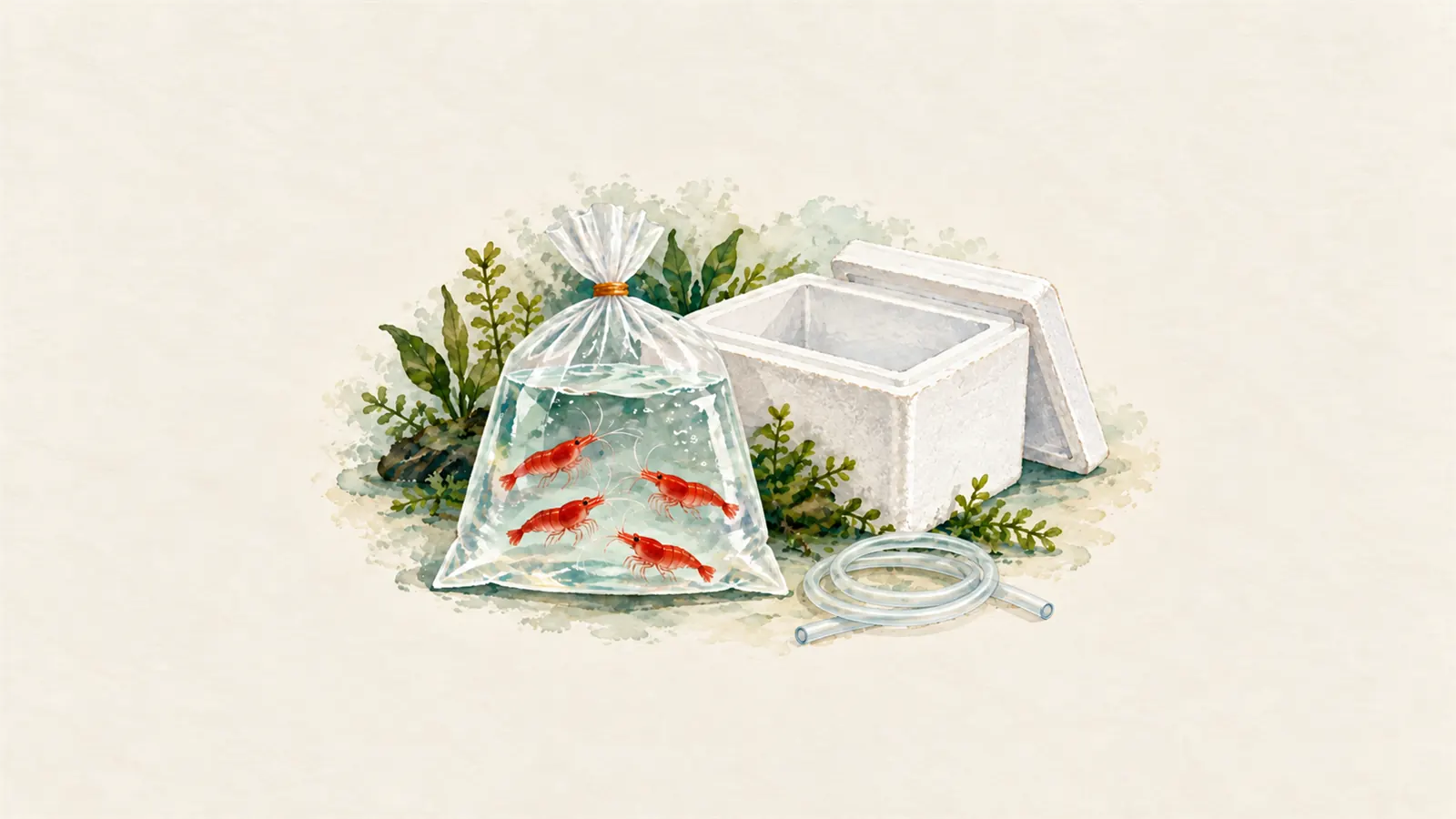
What to prepare before moving shrimp
Transport starts before the shrimp go into the bag. Stop feeding 12–24 hours beforehand. Hungry shrimp produce less waste, which means less ammonia building up in the sealed bag. There is no need to fast them longer.
Fill the bag with water from the tank the shrimp live in. Adding a small piece of moss gives them something to hold on to and stops them bumping into each other on the way.
How to pack a shrimp bag
- Use a thick, leak-proof aquarium bag; double-bag if you can. Tape the corners or use round-bottom bags so shrimp do not get trapped in the corners.
- Use plenty of water for the number of shrimp. Fill the bag so that about a third is air and tie it tightly. Sellers use pure oxygen instead of air for long journeys.
- Wrap the bag in newspaper and put it in an insulated box such as polystyrene foam. Fill the gaps so the bag cannot move around.
- In cold weather a heat pack, in very hot weather a cold pack can be used. Never use both at once and never let either touch the bag directly; put paper in between.
How to receive shrimp that arrive by mail
Open the parcel as soon as it arrives and check the shrimp. Remove any dead shrimp right away; a decaying shrimp quickly fouls the water in a sealed bag.
Important: ammonia builds up in the sealed bag over the hours. While the bag is closed the pH usually stays low, which keeps this ammonia relatively harmless. Once the bag is opened and the water meets the air, the pH rises and the same ammonia becomes more toxic. So do not leave the bag standing open; move the shrimp to the acclimation container straight away and start drip acclimation.
To match the temperature, you can float the sealed bag in your tank for 15–20 minutes before opening it. If the bag water is cloudy or smells bad, acclimating a little faster is usually better than keeping the shrimp in that water for long.
How to drip acclimate
- Put the shrimp and the bag water in a clean container. The water should be deep enough to cover the shrimp.
- Start a siphon from the tank to the container with thin airline tubing.
- Tie a knot in the tubing or fit a small valve or clip to slow the flow to 1–2 drops per second.
- Continue until the water in the container has doubled or tripled. This usually takes 1–2 hours. If the seller's water and your tank values are very different (especially with Caridina), go even slower.
- Move the shrimp to the tank with a net. Do not pour the container water into the tank.
Keep the lights dim during acclimation. If you have a TDS meter, you can watch the container's reading move closer to your tank's.
What to do in the first days after shipping
- Do not feed on the first day. New arrivals usually do not eat; food sinks to the bottom and fouls the water.
- Keep the light off or dim for a few hours and avoid moving around the tank too much.
- From the second day, feed a tiny amount and watch whether they eat.
- Avoid large water changes in the first days; stable values matter.
- A wave of molts within a few days of transport is normal.
How to reduce losses after shipping
Losses in the first days usually come from: shipping in extreme heat or cold, rushed acclimation, a tank that has not finished cycling and feeding on the first day.
- Do not schedule shipping on very hot or freezing days; waiting a day is better than losing shrimp.
- Do not have the parcel delivered when nobody is home; it should not sit at the door.
- Make sure your tank has completed its cycle. Details in the shrimp tank setup guide.
- Check the shrimp often in the first days and remove any dead ones right away.
It is normal for shrimp to hide for a while. But shrimp lying on their side and unable to get up, constantly darting around or not moving at all are signs of serious stress and bad water; test your water right away. We list the possible causes in why shrimp die.
The values and advice in this guide reflect what is widely accepted in the shrimp hobby. They can vary with the line, your water and the breeder your shrimp came from. Make changes to your tank in small steps.