How to Cycle a Shrimp Tank: A Step-by-Step Guide
Before you put shrimp in a new tank, the most important job is completing the cycle. Cycling is the foundation of an environment where shrimp can live safely. Shrimp are far more sensitive to ammonia and nitrite than most fish, so the cycle has to be finished patiently and confirmed by test results, not rushed.
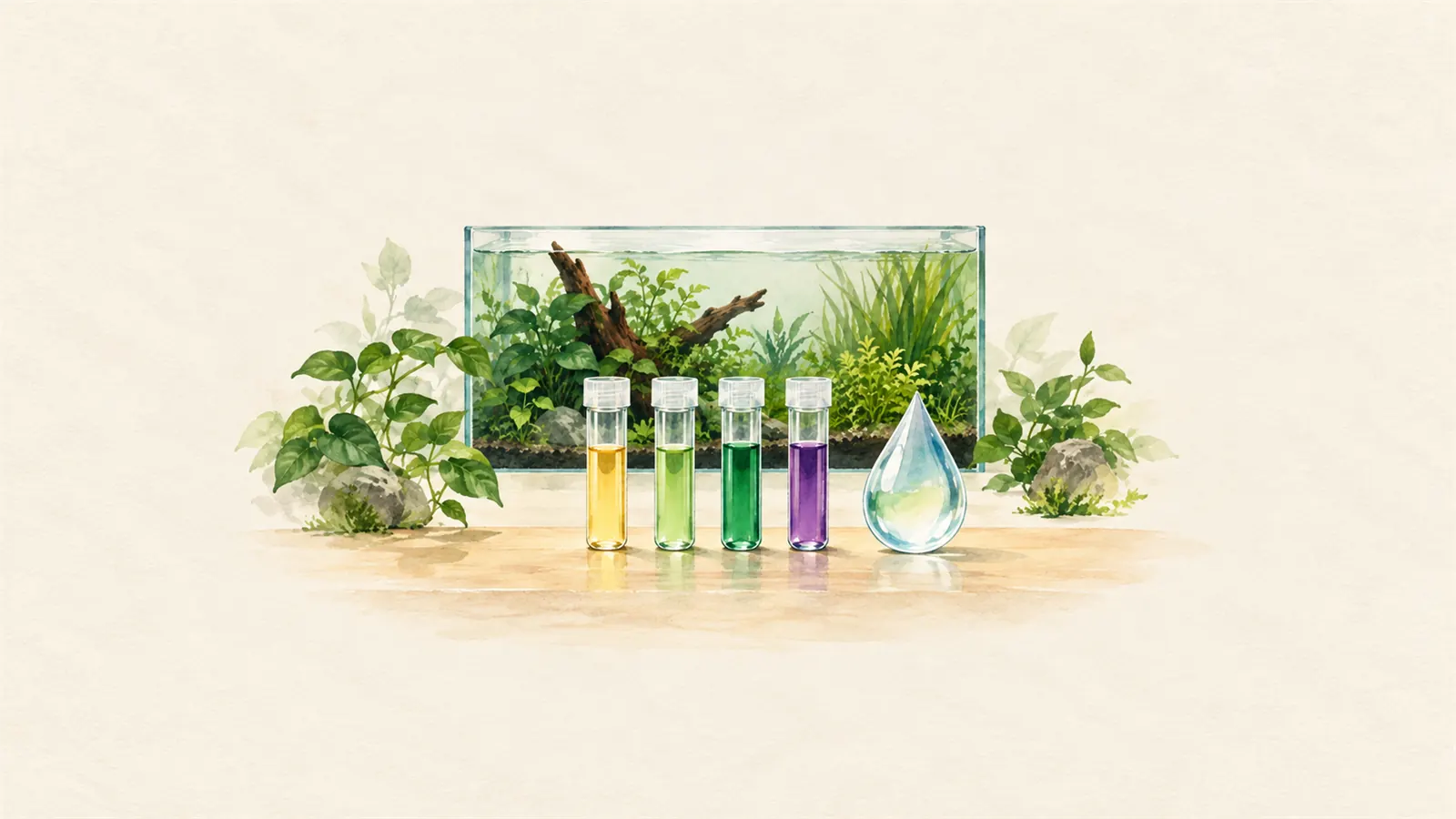
What is the nitrogen cycle?
Leftover food, waste and decaying plant matter turn into ammonia, which is toxic to shrimp even in very small amounts.
In a mature tank, beneficial bacteria deal with it. One group converts ammonia into nitrite, which is also toxic; another converts nitrite into nitrate, which is much less harmful and is kept low with water changes and plants.
These bacteria do not live in the water itself but mostly on the surfaces of filter media, substrate and decor. A new tank does not have these colonies yet; cycling is the time it takes them to establish. During this period ammonia rises first, then nitrite, and as both fall, nitrate starts to climb. This swing is normal and shows the cycle is working.
Target values by shrimp type
Knowing which shrimp you plan to keep tells you what values to aim for while the tank cycles. These are widely accepted starting ranges.
| Parameter | Neocaridina (Red Cherry, Blue Dream, etc.) | Caridina (Crystal Red, Taiwan Bee, etc.) |
|---|---|---|
| Temperature | 20–26 °C (68–79 °F) | 20–24 °C (68–75 °F) |
| pH | 6.5–8.0 | 5.8–6.8 |
| GH | 6–10 | 4–6 |
| KH | 2–6 | 0–1 |
| Before adding shrimp | Ammonia 0, nitrite 0 | Ammonia 0, nitrite 0 |
| Typical cycle time | 4–6 weeks (inert substrate) | 6–8 weeks (active substrate) |
Active substrate lowers pH and releases ammonia of its own in the first weeks, which is why Caridina tanks usually take longer to cycle. See the water parameters guide for details.
Fishless cycling, step by step
The safest method for shrimp is a fishless cycle, with no animals in the tank:
- Set up the tank. Add substrate, filter, plants and decor, fill it and switch the filter on. The filter must never stop during the cycle. If you use tap water, add a conditioner that removes chlorine and chloramine; both kill bacteria.
- Add an ammonia source. The bacteria need ammonia to feed on. Use a small pinch of fish food every day, or pure aquarium ammonia (ammonium chloride). If you use liquid ammonia, make sure it has no perfume or other additives. Keeping ammonia around 2–4 ppm is enough; very high levels can slow bacterial growth.
- Test regularly. Test ammonia, nitrite and nitrate every few days. Liquid drop tests are more reliable than strips at low readings.
- Do a partial water change if needed. If ammonia goes well above 4 ppm or nitrite above 5 ppm, bacterial growth can stall; bring the levels down with a partial change. Otherwise, no water changes are needed during the cycle.
- Wait for the finish signal. When ammonia and nitrite read zero several days in a row while you keep adding ammonia, and nitrate is rising, the cycle is complete. Seeing that for a full week is even more reassuring.
- Do a large water change. Before adding shrimp, do a large water change to bring down the accumulated nitrate. The new water's temperature and hardness should be close to the tank's.
How long does cycling take?
Usually 4–6 weeks, but it can be shorter or longer depending on temperature, substrate and method. Many keepers prefer to wait 6–8 weeks so biofilm has time to develop too. Trust your test results, not the calendar.
With an inert substrate (sand, gravel) you have to add the ammonia source yourself. With active substrate, the ammonia it releases may be enough at first; in those tanks, do not add shrimp until ammonia has stayed at zero for a good while.
Ways to speed up the cycle
- Material from a mature tank: a filter sponge or media from a healthy, established tank carries a ready-made bacterial colony and can shorten the process noticeably. Make sure the source tank is disease-free; pests such as planaria and hydra can hitchhike this way.
- Bottled bacteria: bacteria products sold for aquariums can help. Check the expiry date and storage conditions. Only testing can confirm the cycle is complete.
- Plenty of plants and surfaces: plants and decor give bacteria more surface area and help biofilm develop. Keeping the light moderate during the cycle prevents an algae bloom.
Should you add shrimp as soon as the cycle ends?
Once the cycle is complete the tank is technically safe, but there is one more thing that matters for shrimp: biofilm. This thin layer that forms on surfaces over time (bacteria, diatoms, algae and microscopic organisms) is shrimp's most important natural food, especially for babies, which hatch as miniature adults and start grazing right away. Waiting a few more weeks after the cycle gives your shrimp a more mature tank with more to eat.
Careful with filter maintenance: never rinse the filter sponge under the tap. Chlorine in tap water can kill the bacteria you worked hard to grow. Squeeze the sponge gently in tank water removed during a water change.
Is the cycle finished? Checklist
- Ammonia 0 (several days in a row, ideally a week)
- Nitrite 0 (several days in a row, ideally a week)
- Nitrate brought down with a water change; below 20 ppm for shrimp
- pH, GH and KH suit your target species and are stable
- The filter is running without interruption
- No rotting food or dead plant matter in the tank
- The water is clear; if there is a temporary white bacterial bloom, wait for it to pass
- The tank has had a few extra weeks for biofilm to form
Common mistakes and how to avoid them
- Calling the cycle done too early. Clear water or the first algae does not mean the bacteria are ready; go by your test results.
- Cycling with shrimp in the tank. Adding sensitive animals "to finish the cycle" almost always ends in losses.
- Replacing filter media too often. A brown sponge is full of bacteria; replacing it throws most of them away.
- Overfeeding. During and after the cycle, too much food causes ammonia spikes and pests such as planaria. For shrimp the rule is "little but regular".
- Using products with copper. Copper is deadly to shrimp. Some fish medications, snail killers and fertilizers contain it; never add anything to a shrimp tank if you do not know what is in it.
- Sudden, large water changes. Changing water values quickly after shrimp are in can be fatal, especially during a molt. Keep changes small and regular.
Tips for beginners
- Do not start with a very small tank. Values swing quickly in tiny tanks; 20 liters (about 5 US gallons) or more is safer for a first colony. See the tank setup guide.
- Keep your test kit handy. Test ammonia, nitrite, nitrate and pH regularly and do not make decisions without measuring.
- Be patient. Do not panic if the cycle is not done in 4 weeks. Low temperature or too little ammonia can make it take longer.
- Start with only a few shrimp. A new tank has limited biological capacity; a small group avoids sudden ammonia spikes.
Notes for experienced keepers
- Feed the biofilm: for a few weeks after the cycle, very small amounts of powdered food or botanicals such as dried leaves or alder cones enrich the surfaces babies will graze on.
- Seeding from a mature tank: water squeezed from a healthy tank's filter sponge can speed up the cycle, but only if you accept the risk of bringing in pests.
- Stable parameters: in Caridina tanks, holding pH and KH in a narrow range and avoiding sudden GH changes is critical. Test new water and match it to the tank before every change.
Frequently asked questions
Should the light be on during the cycle?
6–8 hours a day is enough to support plant growth without an algae bloom. Leaving the light on constantly does not speed up the cycle; it only grows more algae.
Ammonia never rises. Has the cycle not started?
If the ammonia source is too small, ammonia can stay low. Keep feeding the bacteria with a measurable amount (around 2 ppm). Nitrite appearing, and then nitrate, shows the cycle is working.
Do I need a bacteria supplement?
No. Bacterial colonies establish on their own. A supplement can shorten the process, especially if you have no material from a mature tank, but either way confirm the result by testing.
What values are ideal for shrimp once the cycle is complete?
For Neocaridina pH 6.5–8.0, GH 6–10 and KH 2–6; for Caridina pH 5.8–6.8, GH 4–6 and KH 0–1 are widely accepted ranges. Above all, the values should stay stable.
Do water changes during the cycle kill the bacteria?
No. Most bacteria live on surfaces, not in the water, so a measured water change does not harm them. Still, during the cycle you only need to change water if ammonia or nitrite climb very high, and at the end to bring nitrate down.
The values and advice in this guide reflect what is widely accepted in the shrimp hobby. They can vary with the line, your water and the breeder your shrimp came from. Make changes to your tank in small steps.