What Is a TDS Meter and How to Use It in a Shrimp Tank
A TDS meter is a small, inexpensive device that shows the total amount of dissolved substances in aquarium water in ppm. In a shrimp tank it is a quick guide for water changes, adding minerals and acclimating new shrimp, but it does not tell you exactly what is in the water. Cherry shrimp are usually kept at 150–250 ppm, and Caridina such as Crystal Red at 100–200 ppm.
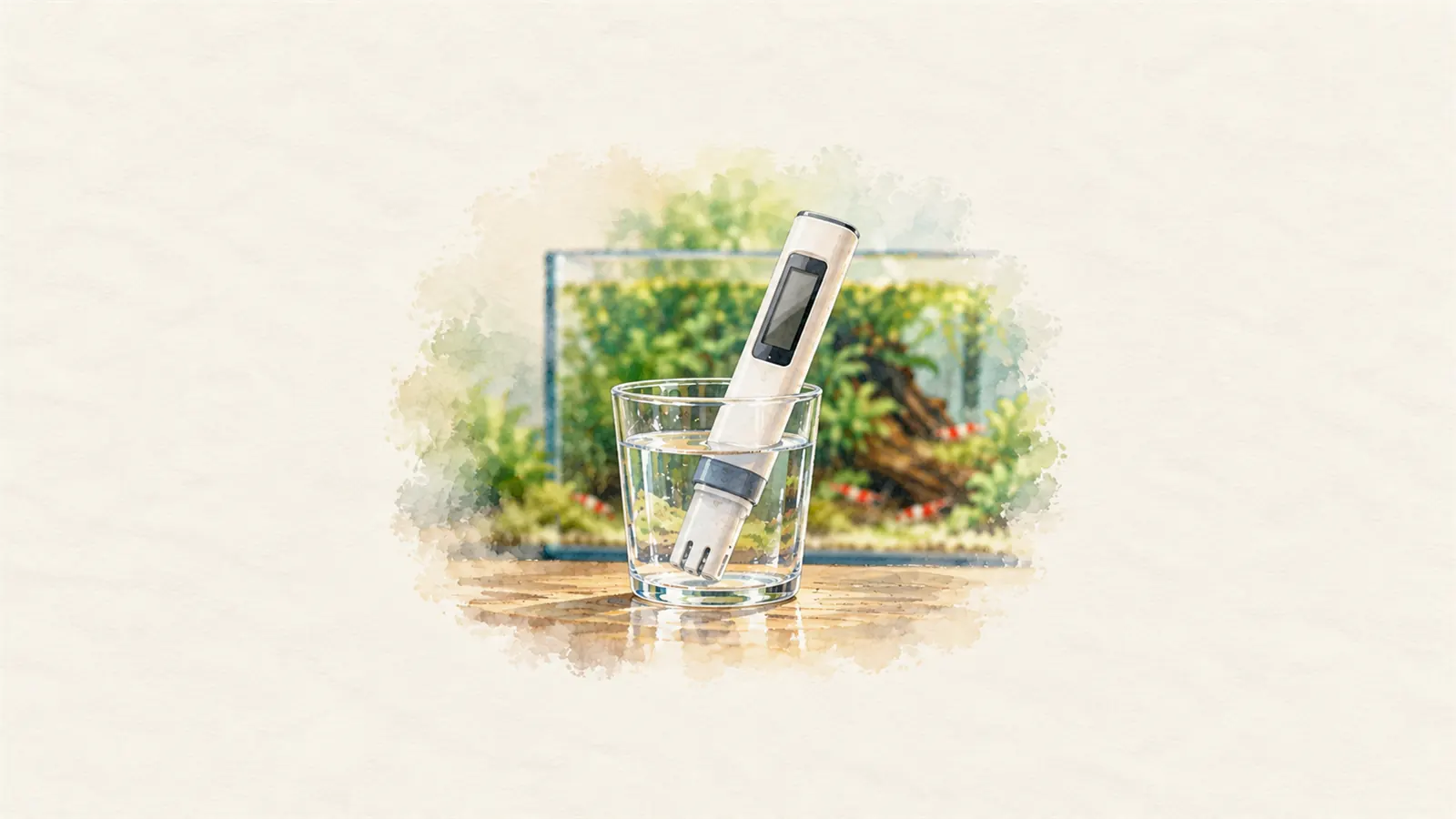
What exactly does a TDS meter measure?
TDS stands for total dissolved solids. The device actually measures the water's electrical conductivity and converts it into an approximate ppm value. The more minerals and ions in the water, the higher the conductivity: calcium, magnesium, sodium, carbonate, sulfate and others all add to the reading.
But TDS does not tell you which substance is present and how much. In a tank reading 200 ppm, TDS cannot tell you whether calcium and magnesium dominate or unwanted salts have built up. That is why TDS should always be read together with GH and KH. We explain how to read all three together in the water parameters guide.
How to use a TDS meter
- Remove the protective cap and rinse the probe with clean water.
- Take a little of the water you want to measure in a small, clean cup. Measuring in a separate cup gives more consistent results than measuring directly in the tank.
- Dip the probe to the marked depth, stir gently and wait a few seconds until the reading settles.
- After measuring, rinse the probe, ideally with pure (distilled or RO) water, dry it and put the cap back on.
Most pen-style TDS meters correct for temperature automatically, but measuring at a similar temperature each time still makes comparisons easier.
How to calibrate a TDS meter
Most meters come calibrated from the factory, but they can drift over time. Calibration uses the standard calibration solution named in the manual; for pen-style meters the common one is a 342 ppm (NaCl) solution. Some devices instead ask for a conductivity standard (for example 1413 µS/cm). You dip the probe in the solution and bring the display to the solution's value with the calibration button or the small adjustment screw.
Without a solution you can do a rough check: distilled water should read very close to 0. If you see a clear value such as 15–20 ppm, the probe may be dirty or the meter may have drifted. Checking every few months makes life easier, especially with a Caridina tank.
What TDS should a shrimp tank have?
There is no single right number; it depends on the species and the water you use.
- Cherry shrimp and other Neocaridina: adapt to a wide range. Usually 150–250 ppm is the target; a lot of tap water falls in this range.
- Crystal Red, Taiwan Bee and other Caridina: like soft water. Usually 100–200 ppm, with most keepers preferring around 120–160 ppm. This is mostly achieved by preparing RO water with a shrimp mineral; details in the Caridina care guide.
These ranges are not strict rules. What matters most is that the value your shrimp are used to does not change suddenly. Swings of tens of ppm within a day can lead to stress and molting problems.
What a TDS meter does not measure
The most common mistake is to look at TDS and assume the water is fine in every respect. TDS does not tell you about:
- pH: two waters with the same TDS can have very different pH.
- GH and KH: critical for shell health and pH balance; they need separate tests.
- Ammonia, nitrite, nitrate: even levels dangerous to shrimp barely change TDS. You need a test kit to see them.
- Chlorine and copper: invisible in TDS but deadly to shrimp. Always treat tap water with a dechlorinator.
How to use TDS in practice
Its most useful job is water changes. If your tank is at 200 ppm and your new water is 120 ppm, a big change drops the tank value all at once. Instead, make small, regular changes or bring the new water's TDS close to the tank's. When buying new shrimp, measuring the TDS difference between the seller's water and your tank also tells you how slowly to acclimate them. When adding minerals, add a little at a time, wait a few minutes and measure again, and follow the product's own instructions.
When molting problems keep happening, TDS and GH swings are among the first things to check; see the molting guide as well.
The values and advice in this guide reflect what is widely accepted in the shrimp hobby. They can vary with the line, your water and the breeder your shrimp came from. Make changes to your tank in small steps.