What Fish Can Live With Aquarium Shrimp?
The honest answer to "can I put my shrimp in a tank with fish?" is: with some fish, yes, but almost every fish sees at least baby shrimp as food. Step by step, we explain which fish are relatively safe, which are a direct danger to shrimp and how to keep the risk as low as possible.
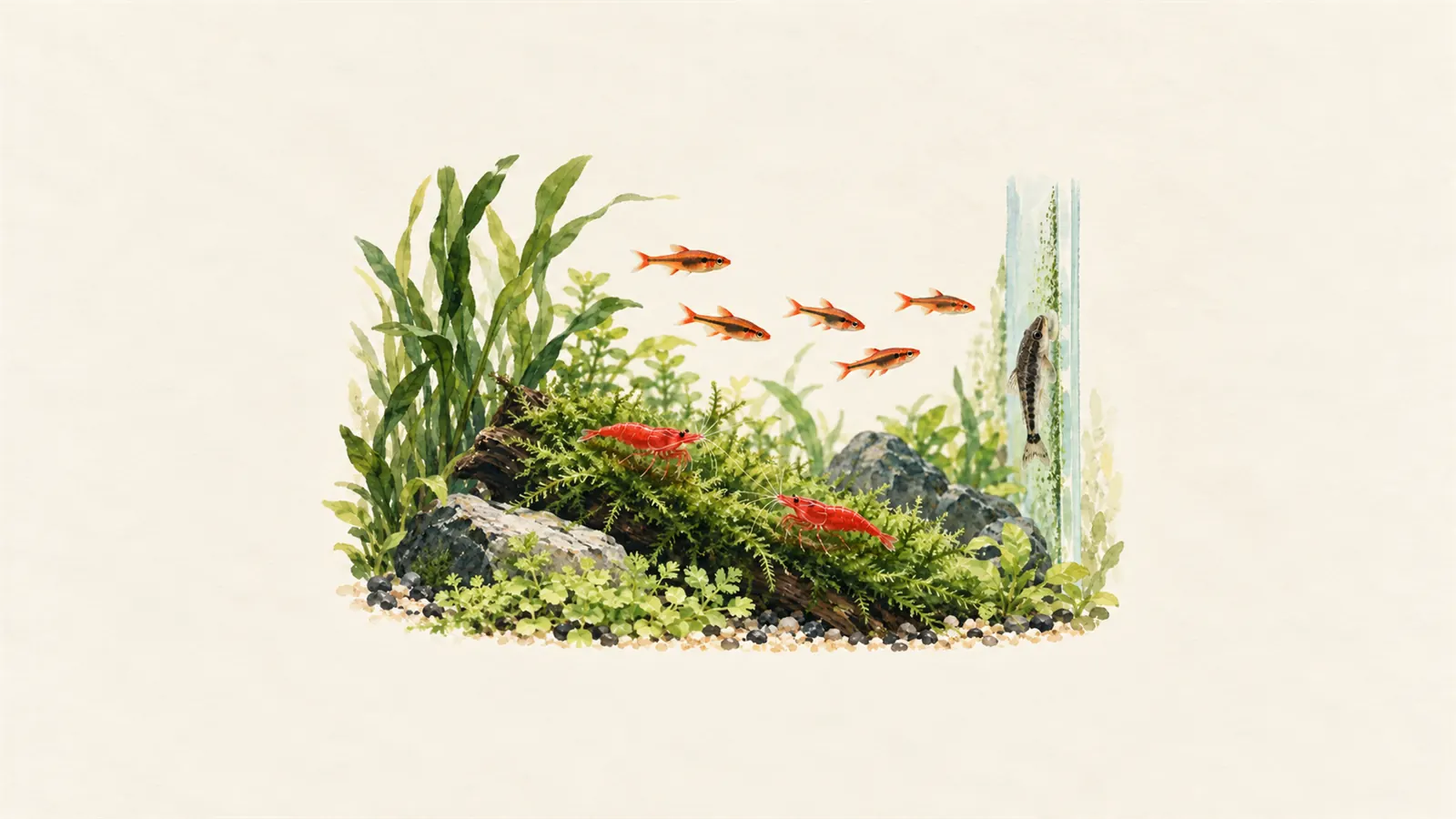
The basic rule: anything that fits in a fish's mouth is food
To a fish, a shrimp is food; that is how an aquarium works and it does not make the fish "bad". An adult cherry shrimp of 2–3 cm usually lives safely with small, peaceful fish. But newborn shrimplets of 1–2 mm fit in almost any fish's mouth. So when choosing tank mates, think in terms of two different goals:
- You just want a few shrimp living in the tank: possible with small, peaceful fish. Adults live for a long time; some babies will be lost.
- You want to breed shrimp: the best and most predictable result is a tank with only shrimp (and snails).
In a tank with fish, shrimp numbers do not stay constant. Some babies being eaten is not a failure but the expected result. The more fish and the hungrier they are, the higher the losses; the same happens as the tank gets smaller and hiding places shrink.
Decide on your goal first
- Display tank: the shrimp are the residents and the fish are guests that add movement. You need to accept baby losses as normal.
- Breeding tank: shrimp on their own. Baby survival is highest here.
- Mixed tank: in between. With dense plants and good feeding some babies grow up, but numbers fluctuate.
Shrimp do not harm fish; it is the other way round. So when choosing tank mates, focus on a single question: what will this fish do to the shrimp?
Fish generally compatible with shrimp
The fish below usually leave adult shrimp alone. They may still eat some of the babies; "compatible" means "relatively safe", not guaranteed:
- Otocinclus: an algae-eating, extremely peaceful small catfish. One of the safest fish for shrimp tanks. Keep them in a small group and feed extra when there is not enough algae; hungry otocinclus weaken quickly.
- Pygmy corydoras: small, calm bottom dwellers. They share the bottom with shrimp but are not aggressive.
- Chili rasbora and similar micro rasboras: their mouths are too small to harm adult shrimp. The chance of them hunting babies is low but not zero.
- Small danio species (e.g. celestial pearl danio): generally compatible, active fish. They may hunt babies.
- Endler's livebearer: usually leaves adult shrimp alone but may eat babies. It is smaller than the guppy.
What these species have in common is a small mouth and no territorial behavior. Still, individuals behave differently; one fish of a species may ignore shrimp completely while another is keen on hunting babies.
Fish that need caution
- Neon tetras and other tetras: rarely bother adult shrimp but do hunt babies. They are more active and competitive when feeding as a school.
- Guppies: it depends on the individual; some actively hunt babies. Guppies also breed fast, so the fish load in the tank rises quickly.
- Betta: entirely individual. Some bettas live peacefully with shrimp, others hunt even adults. If you try it, start with inexpensive shrimp and a backup plan, and watch the tank closely in the first week.
Living with fish from this group, a slow decline in shrimp numbers is normal. If adult shrimp disappear too, the problem may be that particular fish's behavior rather than the species.
Fish not compatible with shrimp
These fish eat adult shrimp too or keep them constantly stressed. Stress is as dangerous as being eaten: shrimp hide all the time, cannot feed and may have molting problems.
- Angelfish and other cichlids (convicts, oscars, African cichlids)
- Goldfish
- Barbs (tiger barbs etc.)
- Large gourami species
- Crayfish and crabs
Crayfish and crabs are crustaceans, not fish, and hunt shrimp directly; most are more active at night, so looking calm during the day is misleading.
Risk table at a glance
| Fish group | Risk to adult shrimp | Risk to babies | Note |
|---|---|---|---|
| Otocinclus, pygmy corydoras | Very low | Medium | The safest options |
| Micro rasboras, small danios | Low | Medium–high | Small mouths, but they still hunt babies |
| Endlers, guppies | Low–medium | High | Varies by individual |
| Neon tetras and other tetras | Low–medium | High | More active in a school |
| Betta | Variable | High | Individual character decides |
| Angelfish, cichlids, barbs, gouramis, goldfish | High | Very high | Not recommended |
Snails: the best tank mates
Snails get along perfectly with shrimp and help clean up leftover food. Nerite, ramshorn and Malaysian trumpet snails are common in shrimp tanks. Nerites do not reproduce in fresh water, so their numbers are easy to control. Ramshorns can multiply quickly when there is too much food; the way to keep them in balance is to cut back on feeding. Malaysian trumpet snails help aerate the substrate but also multiply fast with excess food.
Assassin snails hunt other snails and may also eat dead or weak shrimp, so they are not a good choice for a shrimp tank.
Steps to protect baby shrimp in a tank with fish
- Add the shrimp first. Put the shrimp in the tank first and let them settle for a few weeks and learn the hiding places. Adding fish afterwards works better.
- Add dense moss. Mounds of Java moss or Christmas moss are natural shelter for babies; here moss is not decoration but functional cover.
- Create hiding places. Shrimp tubes, cholla wood, gaps between stones and broken pot pieces create corners fish cannot reach.
- Use floating plants and dense foreground plants. They make it harder for fish to reach babies and give shrimp extra surface area.
- Do not let the fish go hungry. Hungry fish hunt more eagerly. Regular, measured feeding reduces the pressure on shrimp; overfeeding fouls the water.
- Set up a separate tank for babies if needed. If you want to breed, this is the surest solution. Moving pieces of moss or plants between tanks is a practical way to transfer babies.
- Remove the shrimp before treating fish. Many fish medications are toxic to shrimp, and products containing copper are especially risky. If the fish tank needs treatment, move the shrimp to a separate container first and read the invertebrate warnings on the label.
Common mistakes and how to avoid them
- Assuming "peaceful fish = safe shrimp". Even a peaceful fish sees baby shrimp as food. Decide based on mouth size and hunting behavior, not on the species' general temperament.
- Too few hiding places. In a bare, sparsely planted tank, shrimp are always exposed and stress rises. Plenty of moss and gaps between stones are essential.
- Mistaking falling numbers for disease. Baby losses are normal in a tank with fish; sudden mass deaths, on the other hand, may come from water values or medication. Tell the two apart.
- Adding fish without quarantine. If a new fish brings disease, you will need to treat, which means risk for the shrimp. Observe new fish in a separate tank for a while.
- Underestimating medications and chemicals. Some fish medications and algae treatments harm shrimp. Never use a product in a shrimp tank if you do not know what is in it.
- An overcrowded tank. As the fish load grows, both predation pressure and water pollution increase. Low stocking is always better in shrimp tanks.
Tips for beginners and experienced keepers
If you are just starting
- Start with a single small, peaceful fish species; a mixed community tank has too many variables for a first attempt.
- Put the shrimp in the tank before the fish and watch their behavior for the first few weeks.
- Write down losses. Knowing which fish was added when makes it easier to find the cause of a problem.
- Do not overcrowd the tank; for shrimp, hiding places matter more than open space.
If you are experienced
- Keep a separate, fish-free tank for breeding; think about the visual balance in your display tank.
- Test your water regularly; in a tank with fish, the amount of food directly affects water quality and therefore shrimp health.
- Plan a short trial period before adding a new fish species and watch how the shrimp behave.
Frequently asked questions
Can cherry shrimp live with guppies?
Usually yes, but baby losses will be high. Guppies mostly leave adult shrimp alone but hunt newborn shrimplets. Dense moss and regular feeding reduce the losses but do not eliminate them.
Do bettas eat shrimp?
Some bettas live peacefully with shrimp, others hunt even adults. It is entirely individual behavior; trying it with inexpensive shrimp and a backup plan is safer.
Do shrimp breed in a tank with fish?
They breed, but most of the babies get eaten. In a fish-free tank baby survival is clearly higher; if breeding is your goal, a separate tank is recommended. Details in the breeding guide.
Do fish medications harm shrimp?
Many fish medications are risky for shrimp, and products containing copper are especially dangerous. If treatment is needed, move the shrimp to a separate container and read the invertebrate warnings on the label carefully.
Should fish or shrimp go into the tank first?
Shrimp first. Letting the shrimp get to know the tank, learn the hiding places and settle in without stress, then adding the fish, gives better results.
Do assassin snails eat shrimp?
They are unlikely to catch healthy adult shrimp, but they may eat dead or weak shrimp and they hunt other snails. That is why they are not a good choice for a shrimp tank.
The values and advice in this guide reflect what is widely accepted in the shrimp hobby. They can vary with the line, your water and the breeder your shrimp came from. Make changes to your tank in small steps.