Shrimp Tank in Summer Heat: How to Lower the Temperature
In summer, heat is the biggest risk for a shrimp tank. Cherry shrimp are usually comfortable at 20–25 °C (68–77 °F) and Caridina at 20–24 °C (68–75 °F); above 28 °C (82 °F) they get stressed, and temperatures above 30 °C (86 °F) can cause losses. Opening the lid, running a fan, shortening the light period and keeping the tank out of the sun is enough in most cases.
What temperature is dangerous for shrimp?
Cherry shrimp (Neocaridina) tolerate a wide range, but staying at 26–28 °C for long periods shortens their lives and causes more problems. Above 28 °C shrimp may show signs of stress: sitting still, losing appetite, staying near the surface. Caridina species (Crystal Red, Taiwan Bee) are more sensitive; for them even 26 °C and above is risky.
Temperatures above 30 °C, especially if they last several days, can cause mass losses. Exact limits vary from tank to tank, but the general rule is: a sudden rise in temperature does more harm than a slow one. For other possible causes, see why shrimp die.
How to lower the aquarium temperature
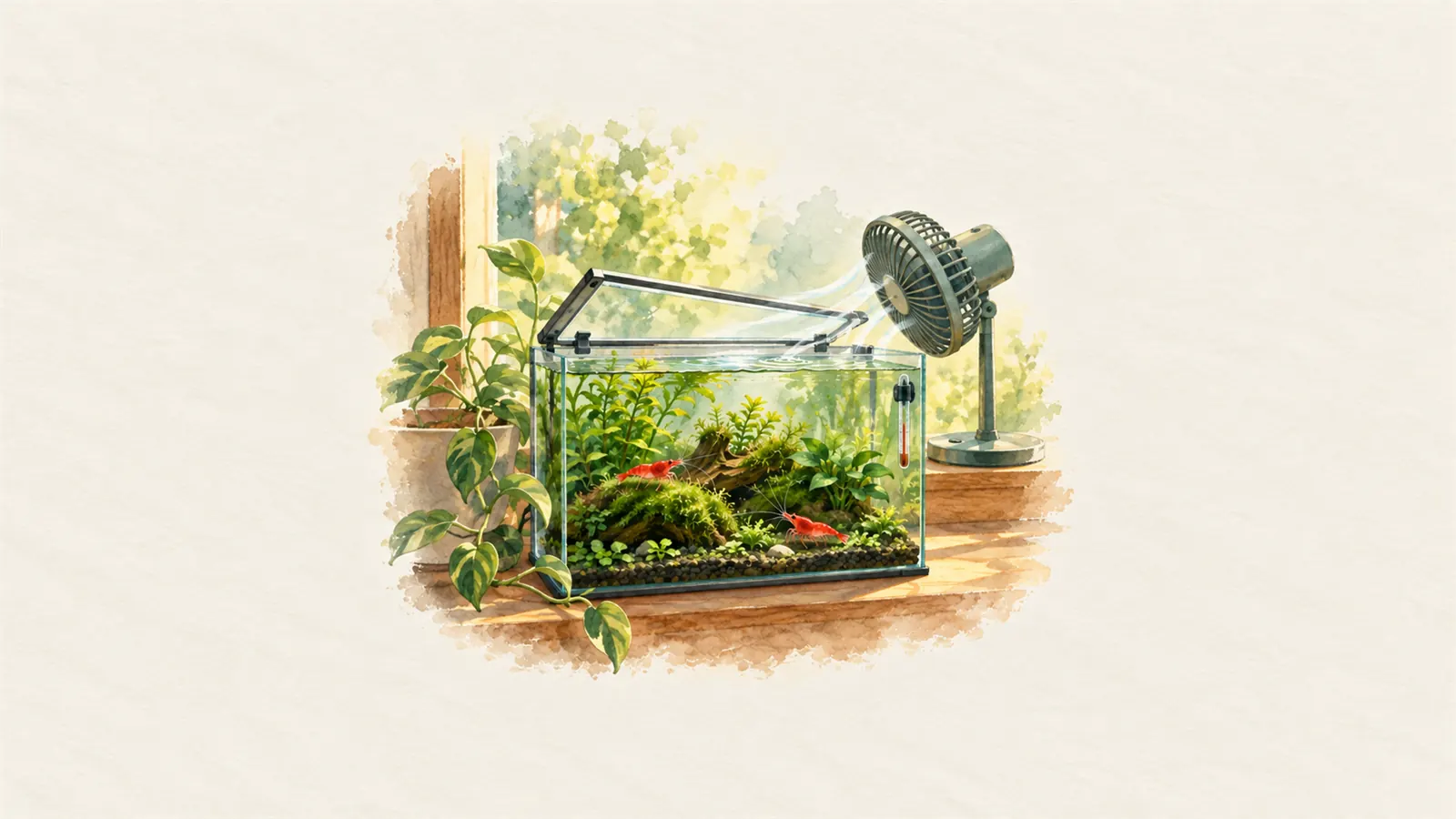
- Open the lid: a closed lid traps heat. An open lid increases evaporation and usually lowers the temperature by 1–2 °C. Shrimp can climb out, so if needed leave a gap or use fine mesh rather than removing the lid completely.
- Use a fan: a small fan blowing across the water surface speeds up evaporation and can usually lower the temperature by a few degrees. It is the most effective and cheapest method.
- Shorten the light period: lighting, especially older lamps, heats the water. In summer, limit the light to 6–8 hours a day and keep it off during the hottest hours.
- Keep the tank out of the sun: a tank in direct sunlight can reach dangerous temperatures within a few hours. Draw the curtains or move the tank.
- Cool the room: room temperature directly affects the tank. Keeping curtains closed during the day and airing the room makes a difference.
- Aquarium chiller: the most reliable way to keep the temperature stable, but expensive. Worth considering for Caridina keepers in hot climates.
What to watch out for when using a fan
Because a fan cools by evaporation, the water level drops quickly. Minerals stay behind when water evaporates, so if you do not top off, hardness and TDS keep rising. Top off every day: in a Caridina tank with mineral-free RO water; in a cherry shrimp tank that runs on tap water, ideally with RO or distilled water. Details in the RO water guide.
Should you add ice or cold water?
Dropping ice straight into the tank or suddenly adding lots of cold water is not a good idea. A sudden temperature drop shocks shrimp and can cause molting problems, and melting ice changes the water values. In an emergency, for example when the temperature is above 30 °C and still rising, floating ice in a sealed bag or bottle on the surface for a short time can be a temporary fix. Watch the thermometer the whole time and bring the temperature down slowly. As a general rule, try not to lower it by more than 2 °C a day.
Why oxygen matters more in summer
The warmer the water, the less oxygen it holds; at the same time shrimp metabolism speeds up and they need more oxygen. Together, these easily cause oxygen shortages in a warm tank. Signs: shrimp gathering near the surface or the filter outlet, sitting still and not eating.
- Add an air stone or increase the air flow to the sponge filter.
- Set the filter outlet so it ripples the water surface.
- Plants consume oxygen at night, so in heavily planted tanks keep the aeration running at night too.
Common summer mistakes
- Dropping the temperature by several degrees at once.
- Keeping the lid closed and the light on for long hours.
- Not topping off evaporation, or topping off with mineralized water.
- Overfeeding: food spoils faster in warm water and uses up oxygen. Feed a little less in summer.
- Leaving the tank in a sunny, closed, stuffy room when you go on vacation.
The values and advice in this guide reflect what is widely accepted in the shrimp hobby. They can vary with the line, your water and the breeder your shrimp came from. Make changes to your tank in small steps.