Blue Dream Shrimp Care: Water Parameters and Keeping the Color
The Blue Dream is a deep blue color form of the same species as the cherry shrimp (Neocaridina davidi), and its care is almost identical. It is a hardy aquarium shrimp; the real work is keeping the blue color over generations. That takes a separate tank, a dark substrate and regular selection.
Water at a glance: temperature 20–25 °C (68–77 °F), pH 6.5–8.0, GH 6–10, KH 2–6, TDS 150–250 ppm. The same ranges as cherry shrimp; stable values matter more than the exact numbers.
What is a Blue Dream shrimp?
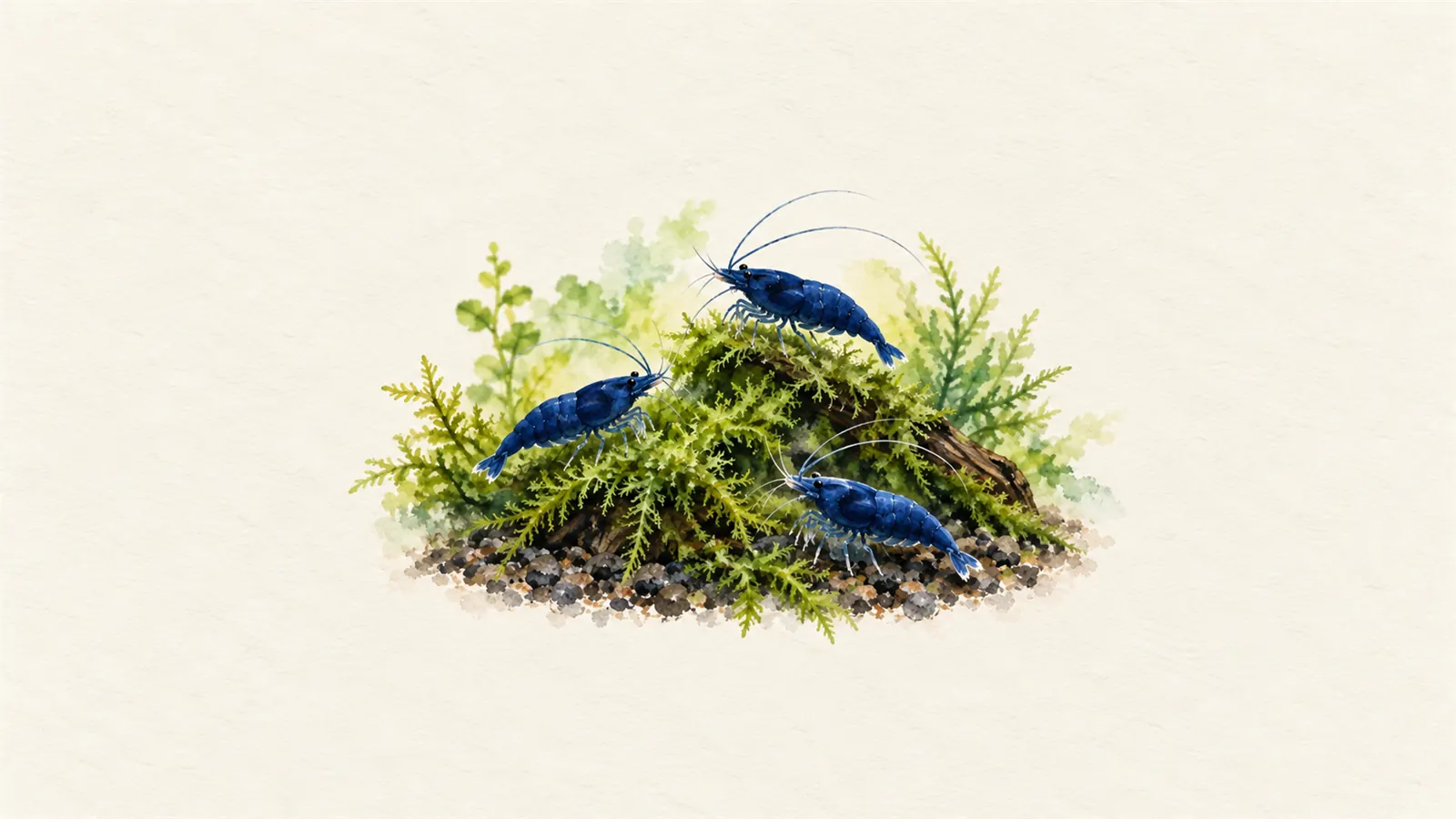
The Blue Dream is a deep, opaque blue form of Neocaridina davidi created through selective breeding. A good individual is evenly deep blue from head to tail; large transparent areas on the sides and tail are undesirable. Females are larger than males (2.5–3 cm) and usually darker; males are smaller and often a slightly lighter shade. Being the same species as the cherry shrimp, it is suitable for beginners too. We explain how it differs from Caridina in Caridina vs Neocaridina.
Do not expect that "blue stays blue forever". The blue has been concentrated through selection and needs constant culling within the colony; without selection, lighter, grayish or brownish individuals take over within a few generations.
What water do Blue Dreams need?
Blue Dreams need the same water as cherry shrimp. In many areas, tap water treated with a dechlorinator is enough, though hardness and TDS vary from place to place. They are sensitive to sudden changes, so keep water changes small and regular. See the water parameters guide.
| Value | Recommended range | Practical note |
|---|---|---|
| Temperature | 20–25 °C (68–77 °F) | Keep the tank out of the sun in summer; warm water holds less oxygen. |
| pH | 6.5–8.0 | A wide range; the real risk is a sudden pH shift. |
| GH | 6–10 | Mineral balance matters for molting. |
| KH | 2–6 | Buffers pH; with very low KH, pH can swing. |
| TDS | 150–250 ppm | Watch for increases after water changes and fertilizing. |
Medications containing copper, some algae treatments and chemicals not safe for invertebrates are dangerous for shrimp. Before using any medication, research its risk for shrimp; if you are not sure, do not use it.
Tank setup, step by step
- Choose a tank of 20 liters (about 5 US gallons) or more; the larger the volume, the more slowly temperature and water chemistry change. See the tank setup guide.
- Use a dark substrate; black or dark brown makes the blue stand out more.
- Add hiding places such as moss, plants and wood.
- Use a sponge filter or a gentle filter with a protected intake.
- Do not add shrimp before the tank has finished cycling.
- Measure your water several days in a row and make sure temperature, pH and TDS are not swinging.
- Drip acclimate new shrimp slowly; do not pour the bag water into the tank.
- Keep lighting and feeding moderate in the first week; hiding is normal.
Why is my Blue Dream losing its color?
- Light substrate and background: shrimp look paler on a light substrate and darker on a dark one.
- Stress: color fades temporarily during transport, sudden water changes or settling into a new tank.
- Molting: right after molting a shrimp can look pale for a while; color returns as the new shell hardens.
- Genetics: every generation produces some lighter individuals. Without selection they gradually take over. This is the main cause of permanent color loss.
- Diet: a varied diet and color-enhancing foods (spirulina, astaxanthin) can support color intensity, but they do not replace genetics.
- Water quality: high nitrate or a sudden rise in TDS can affect shell health and appearance.
| Symptom | Likely cause | What to do |
|---|---|---|
| Color faded within a few days | Stress, new tank, transport | Keep values stable, dim the light, do not rush a water change. |
| Pale after molting | The new shell has not hardened yet | Wait a few days; check GH. |
| Babies getting lighter across the colony | Lack of selection | Keep the evenly deep blue individuals; move the pale ones to another tank. |
| Pale, inactive, poor appetite | Water quality or disease | Check ammonia, nitrite, nitrate and temperature. |
Can Blue Dreams share a tank with other colors?
All Neocaridina davidi colors are the same species and interbreed. If you keep Blue Dreams with another Neocaridina color, within a few generations you will see more and more brown, pale or mixed-color babies. They do not interbreed with Caridina such as Crystal Red, but because their water needs differ, keeping them together is not recommended. See Neocaridina colors.
How to selectively breed Blue Dreams
- In the breeding tank, keep individuals with an even, deep blue body and little transparency.
- Move clearly pale, transparent, brownish or greenish individuals to a separate tank, where you can keep raising them.
- Do not cull males by comparing them with females; males can naturally be lighter. Compare males with each other.
- Do not decide until the babies' color has settled, at about 2–3 months old.
- Keep the best individuals in every generation to slowly deepen the blue.
See the selective breeding guide.
Common mistakes
- Keeping Blue Dreams with other colors: no problem shows in the short term, but within a few generations the colors mix.
- Adding shrimp to a new tank right away: an immature filter and ammonia spikes wear the colony down.
- Large water changes: shrimp are affected by sudden changes in TDS and temperature; small, regular changes are safer.
- Looking only at color and missing health: clean molts, activity and appetite are more important health signs than color.
- Using medications unsuitable for shrimp: products containing copper are dangerous for shrimp.
- Overfeeding: too much food fouls the water.
Tips for beginners and experienced keepers
If you are just starting
Let the tank mature first, watch your water for a few weeks and start with a single color colony. Choose a dark substrate to see the blue; expect your first shrimp to look pale for a few days. Do not jump into selection right away; first watch them molt, eat and produce babies.
If you are experienced
Setting up a separate breeding tank for selection is the most practical way to protect the main colony. Judge males not only by color but also by how even their body coloration is. If the colony will stay closed for many years, adding a few quality individuals from a trusted source now and then preserves genetic diversity; observe newcomers in a separate tank first.
Tip: If newly bought Blue Dreams look pale in the first days, do not worry; once transport stress passes and they get used to the dark substrate, their color usually deepens within a few days. Permanent fading, on the other hand, usually points to a lack of selection.
Frequently asked questions
Do Blue Dreams live in the same water as cherry shrimp?
Yes. The Blue Dream is a color form of Neocaridina davidi; its temperature, pH, GH, KH and TDS ranges are the same as for cherry shrimp. But if another Neocaridina color shares the tank, the colors will mix over time.
Why is my Blue Dream turning brown?
The most common causes are not enough selection and mixing with other Neocaridina colors. A light substrate, stress and water quality can also affect appearance.
Is a dark substrate required for Blue Dreams?
Not required, but it helps a lot to show the blue. A light substrate makes the shrimp look paler; it does not change their genetic color.
Can Blue Dreams and Crystal Reds be kept together?
They do not interbreed because they belong to different genera, but their water needs differ. So keeping them together is not recommended.
When do Blue Dream babies show their color?
Their color becomes clearer as they grow; waiting 2–3 months before a final decision is wiser. Culling too early can lead you to remove individuals that would have colored up well.
The values and advice in this guide reflect what is widely accepted in the shrimp hobby. They can vary with the line, your water and the breeder your shrimp came from. Make changes to your tank in small steps.