How Fast Do Baby Shrimp Grow? A Shrimplet Care Guide
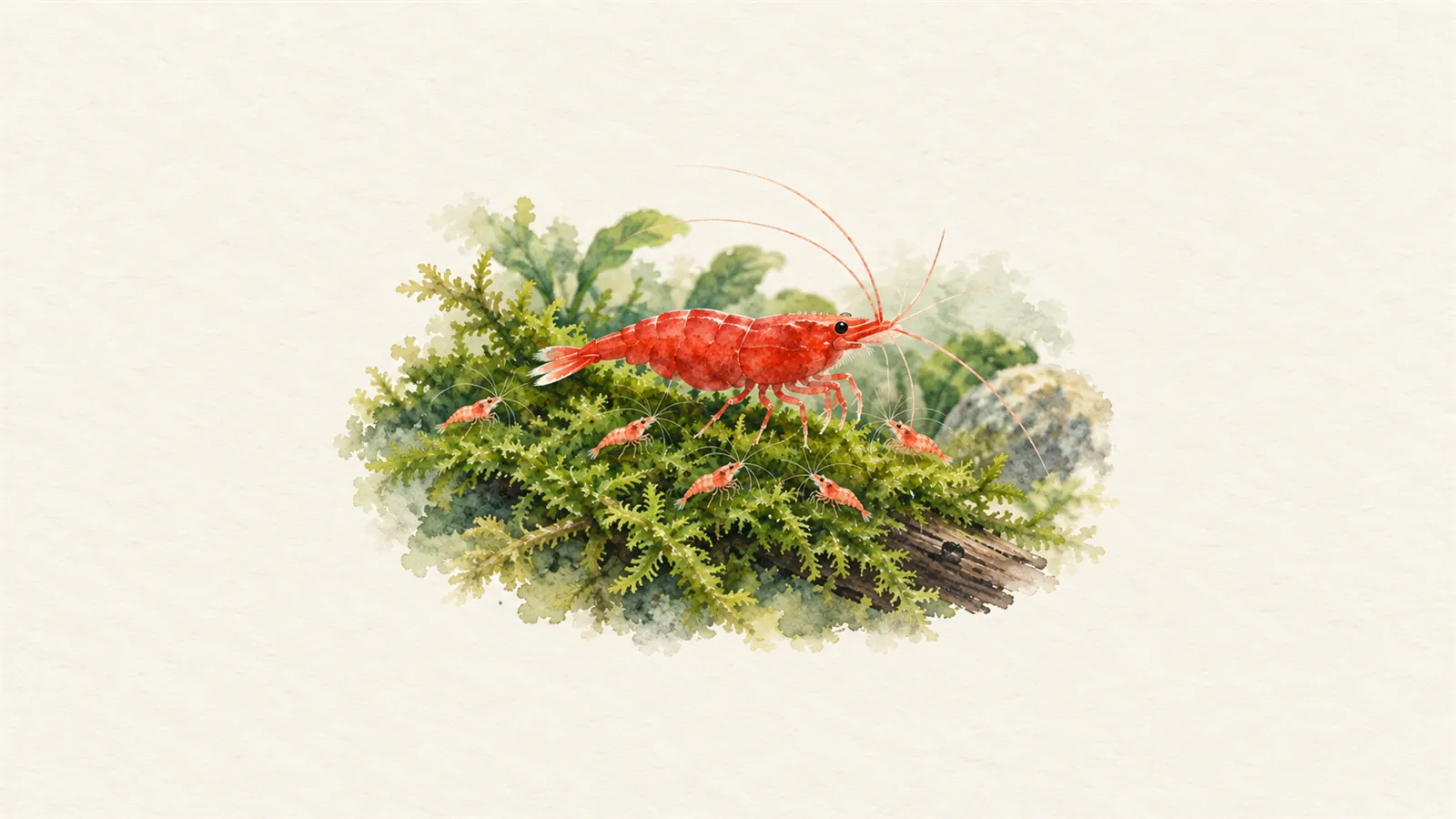
Baby cherry shrimp hatch 1–2 mm long as miniature copies of their parents; there is no larval stage. In good conditions they reach 5–6 mm in about a month and mature in 3–4 months. In the first weeks, the two things that matter most are plenty of biofilm and a safe tank.
Timing depends on temperature, food and how mature the tank is; 22–24 °C (72–75 °F) is a balanced range. Everything here applies to directly developing Neocaridina such as cherry shrimp; raising young is a completely different story for species with a larval stage, such as the Amano shrimp.
How fast do baby shrimp grow?
Neocaridina babies hatch about 1–2 mm long and almost transparent, which makes them hard to spot in the first days. They grow a little with every molt, and young shrimp molt often, roughly every 1–2 weeks. Growth speed depends on water temperature, food supply and how rich the tank's biofilm is.
| Stage | Approx. size | What you see | Priority |
|---|---|---|---|
| Hatching | 1–2 mm | Transparent, hides, grazes constantly | Biofilm and a safe filter |
| First week | 1–2 mm | Hides in moss and leaves | Stable water, no overfeeding |
| About 1 month | 5–6 mm | Color starts to show | Balanced food, clean water |
| 2–3 months | Nearly adult | Males and females start to look different | Water values and mineral balance |
| 3–4 months | Adult | First saddles in females, maturity | Breeding plans |
Warm water speeds up growth but can shorten lifespan. Below 20 °C (68 °F) growth slows noticeably. Sudden temperature swings are far more dangerous for babies than slow growth; if you use a heater, keep the temperature steady.
What do baby shrimp eat?
From the moment they hatch, babies graze the tank's biofilm: the thin layer of bacteria, microscopic algae and organic matter on stones, leaves, moss and glass. In an established, mossy tank, babies can grow without any extra food. That is why raising babies is harder in a new tank, or in one where the glass is always scrubbed and the sponge rinsed every week.
If you want to feed extra, powdered shrimp foods or baby shrimp foods work. Use a very small amount, sprinkled over several spots. Blanched vegetables and dried leaves are also good, thanks to the biofilm that grows on them. Overfeeding fouls the water and hits babies harder than adults; "little but regular" is safer. Feeding details are in what do aquarium shrimp eat.
Caring for babies step by step
- Let the tank mature: the tank the babies hatch in should have built up biofilm over a few months. In a new tank, patience is the most practical way to reduce losses.
- Make the filter safe: use a sponge filter, or always fit a pre-filter sponge on any other filter's intake. Babies sucked into the filter are among the hardest losses to notice.
- Provide hiding places: dense mosses such as Java moss and Christmas moss and dried leaves are both shelter and food. For plant ideas, see the best plants for a shrimp tank.
- Keep water values stable: no sudden changes in temperature, TDS or hardness; keep water changes small and slow.
- Feed carefully: with enough biofilm, extra food is not necessary. If you do feed, give only what disappears within a few hours and remove the rest.
- Keep predators away: even small, calm fish hunt babies. Details in which fish can live with shrimp.
- Watch for planaria and hydra: these especially target babies. If you see them, read the planaria and hydra guide; if you consider chemicals, always research the risk to shrimp first.
- Observe, do not panic: babies hide in the first weeks. Not seeing them does not mean something is wrong; check the feeding spot and the moss regularly.
When do babies reach maturity?
Baby cherry shrimp usually mature in 3–4 months. A mature female shows a yellowish saddle on her back just behind the head, which means eggs are developing. Males usually stay slimmer and smaller, while females fill out. We cover breeding in the cherry shrimp breeding and berried shrimp guides.
Common mistakes with babies and how to avoid them
- Feeding a lot for the babies: most of the food goes to the adults and the rest fouls the water. Give a small amount over several spots.
- Doing a big water change at once: babies cope poorly with sudden change; keep water changes small and regular.
- Over-cleaning the tank and sponge: destroying biofilm removes the babies' main food. Clean the sponge by gently squeezing it in tank water.
- Leaving the filter intake open: without a pre-filter sponge, losing babies is unavoidable.
- Assuming something is wrong when you cannot see them: hiding in the first weeks is normal. At night, a while after lights out, check the moss with a flashlight.
- Using medications carelessly: copper medications and some chemicals are a serious risk to shrimp; if in doubt, do not use them.
Tips for beginners
Your first goal should be babies without losses, not fast growth. If adults and babies share one tank, put filter safety and plenty of moss first. When you see babies, do not rush to add extra food; protect the existing biofilm and the tank's balance first. Keep water changes small and the temperature steady.
Tips for experienced keepers
The real difference in raising babies comes from tank maturity. With enough biofilm, leaves and moss, the need for extra food drops. When many babies disappear, check the filter, predators, planaria/hydra and the last water change first. If you are selectively breeding, judge babies for color and form only once they are a few weeks old; color has not settled in the first weeks.
Frequently asked questions
When do baby cherry shrimp become visible?
They hatch 1–2 mm long and hide in the first days. Not noticing them right away is normal; babies reaching 5–6 mm in about a month become much easier to see.
Can babies stay in the same tank as adults?
Yes. Adult cherry shrimp generally do not hunt babies; they only compete for food. With dense moss, leaves and a safe filter, raising them in the same tank works well for most keepers.
Do babies need special food?
No. In an established, mossy tank rich in biofilm, babies can grow without extra food. If you do feed, use a very small amount of powdered food.
What temperature is best for raising babies?
22–24 °C is a balanced range. Warm water can speed up growth but may shorten lifespan; below 20 °C growth slows. Above all, avoid sudden temperature changes.
Why do baby shrimp disappear or die?
The most common causes are filter intakes, fish, planaria and hydra, sudden changes in water values, over-cleaning and too little biofilm. When babies are lost, check these first.
The values and advice in this guide reflect what is widely accepted in the shrimp hobby. They can vary with the line, your water and the breeder your shrimp came from. Make changes to your tank in small steps.